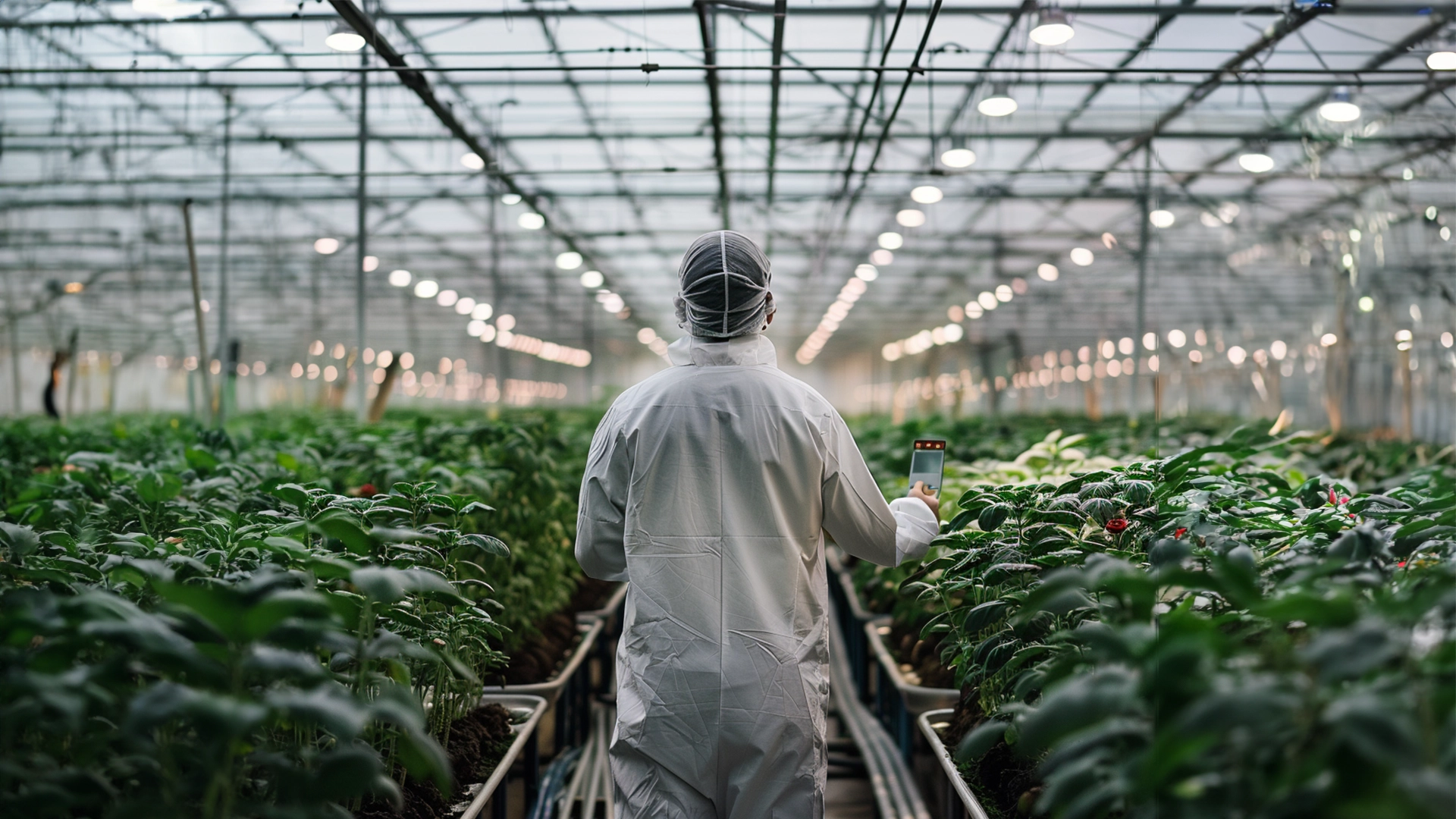
Definition of Greenhouse Automation Systems
Greenhouse automation systems are technological systems that automate and control various agricultural processes. Integrated with sensors, control units, and software applications, these systems precisely manage processes such as irrigation, heating, ventilation, lighting, and fertilization, increasing efficiency and productivity at every stage of agriculture.
Types and Features of Automation Systems
Irrigation Automation
Precise irrigation systems automatically water plants based on their needs through systems integrated with soil moisture sensors and irrigation valves. Drip irrigation systems provide direct water to the soil and plant roots using drip irrigation hoses and control units, thus conserving water.Heating and Cooling Automation
Smart heating systems automatically adjust greenhouse temperatures by being controlled via thermal cameras and temperature sensors. Ventilation systems regulate airflow within the greenhouse through automatic window opening and closing mechanisms, ensuring optimal air conditions.
Lighting Automation
Programmable LED lights support plant photosynthesis and promote growth with spectra that resemble natural sunlight. Daylight control systems adjust lighting according to daylight levels through sensors and motors, contributing to energy savings.
Fertilization Automation
Automatic fertilization distribution systems work in conjunction with sensors and dosage control units to provide plants with the nutrients they require in timely and accurate amounts.Harvest Automation
Automated harvesting machines equipped with robotic arms, cameras, and sensors allow for the automatic collection of crops, reducing labor costs.
Data Monitoring and Analysis Automation
Remote monitoring systems allow greenhouse conditions to be monitored from afar via mobile applications and web-based platforms. Software that collects and analyzes data from sensors tracks and reports greenhouse conditions in real-time.
Advantages of Greenhouse Automation Systems
Increase in Efficiency:
The use of automation systems in agriculture brings numerous advantages, the foremost being increased efficiency. Thanks to precise irrigation and fertilization systems, it optimizes the supply of water and fertilizer according to the needs of the plants, thereby boosting productivity. Additionally, harvest automation systems streamline the harvesting process, reducing labor costs and improving harvest quality.Labor and Cost Savings
Labor and cost savings are significant advantages provided by automation systems. They reduce manual processes, which in turn lowers labor costs. Also, automatic and precise control minimizes human errors and product losses.
Effective Resource Utilization
Effective resource utilization is another major advantage of automation systems. Smart heating and lighting systems optimize energy consumption, thus reducing costs. Precise irrigation systems also reduce water usage, enabling sustainable agricultural practices.Remote and Real-Time Monitoring
Lastly, the ability to monitor in real-time and remotely is another key advantage of automation systems. Greenhouses can be monitored and controlled from afar through mobile applications and web-based platforms. The real-time analysis and reporting of data collected from sensors facilitates the more effective optimization of agricultural operations.
Example Applications and Successful Projects
Across the globe, many greenhouses successfully implement automation systems. These systems play a critical role in enhancing efficiency and productivity alongside sustainable agricultural practices. Particularly in developed countries, the applications of automation systems in the greenhouse sector are quite common, offering numerous benefits.For instance, smart greenhouses in the Netherlands are known for automation systems that save water and energy. These smart greenhouses are equipped with a range of automation technologies such as precise irrigation and fertilization systems, as well as smart heating and lighting control. Sensors continuously monitor soil and air conditions, optimizing the supply of water and fertilizer according to the needs of the plants. Smart heating and lighting systems reduce energy consumption while lowering costs and supporting sustainable agricultural practices.

In Japan, high-efficiency greenhouse production is achieved through automation systems integrated with robotic technologies. Robotic arms and sensors perform tasks such as automatic harvesting, seed sowing, and plant care. These robotic systems reduce labor costs, minimize human errors, and improve harvest quality. In addition, greenhouse conditions are monitored in real time through data monitoring and analysis systems, and agricultural operations are optimized using this data.
Successful greenhouse projects and applications utilizing automation systems can also be found across America, Europe, Asia, and many other regions. These projects are designed and implemented according to various climate conditions and agricultural practices. Equipped with high technology and innovative solutions, these greenhouses promote transformation and progress in the agricultural sector.