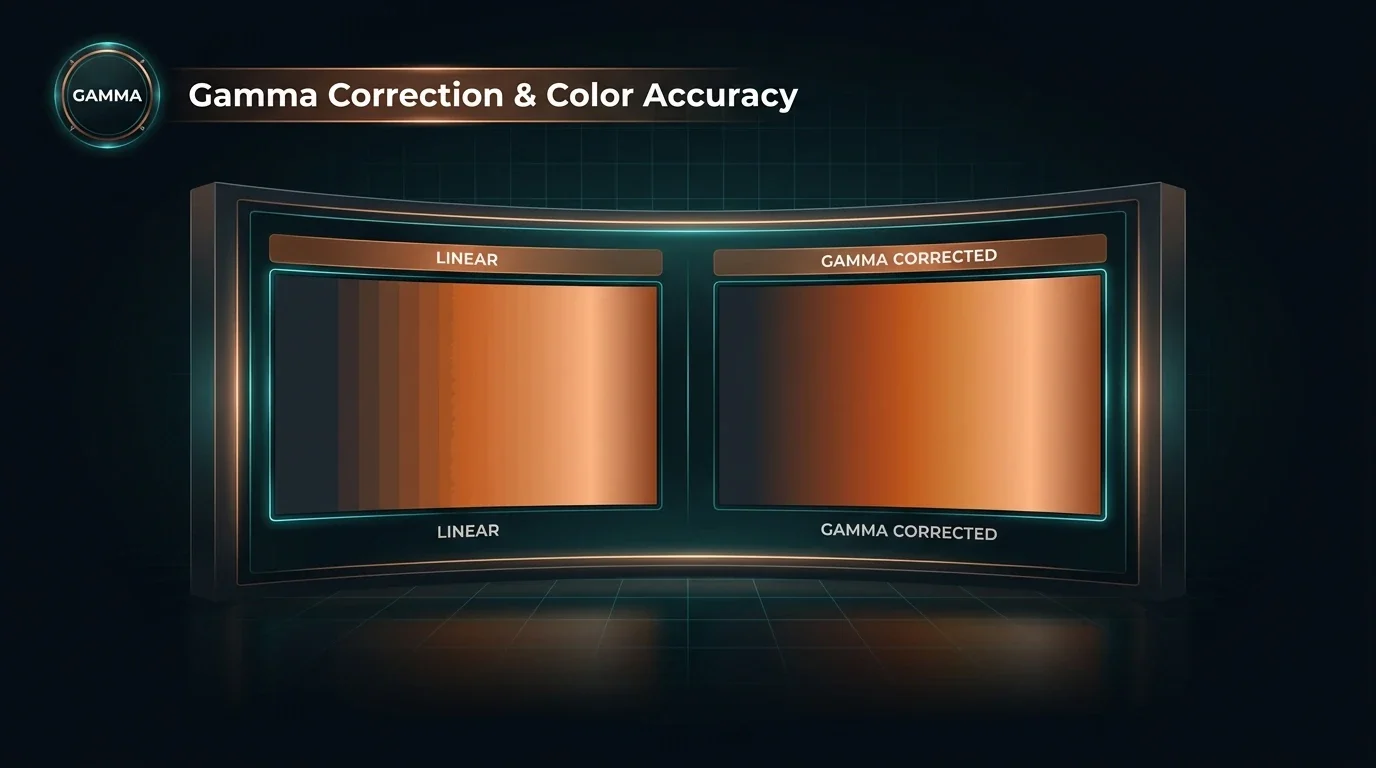
The Eye Does Not Perceive Light Linearly
When you feed an LED half power, the eye does not perceive it as "half brightness"; the human visual system responds to light logarithmically, not linearly. For this reason, when raw (linear) color data is applied directly to an LED, coarse, stepped transitions appear, especially in dark tones. Gamma correction is a mathematical transformation that compensates for this perception difference.
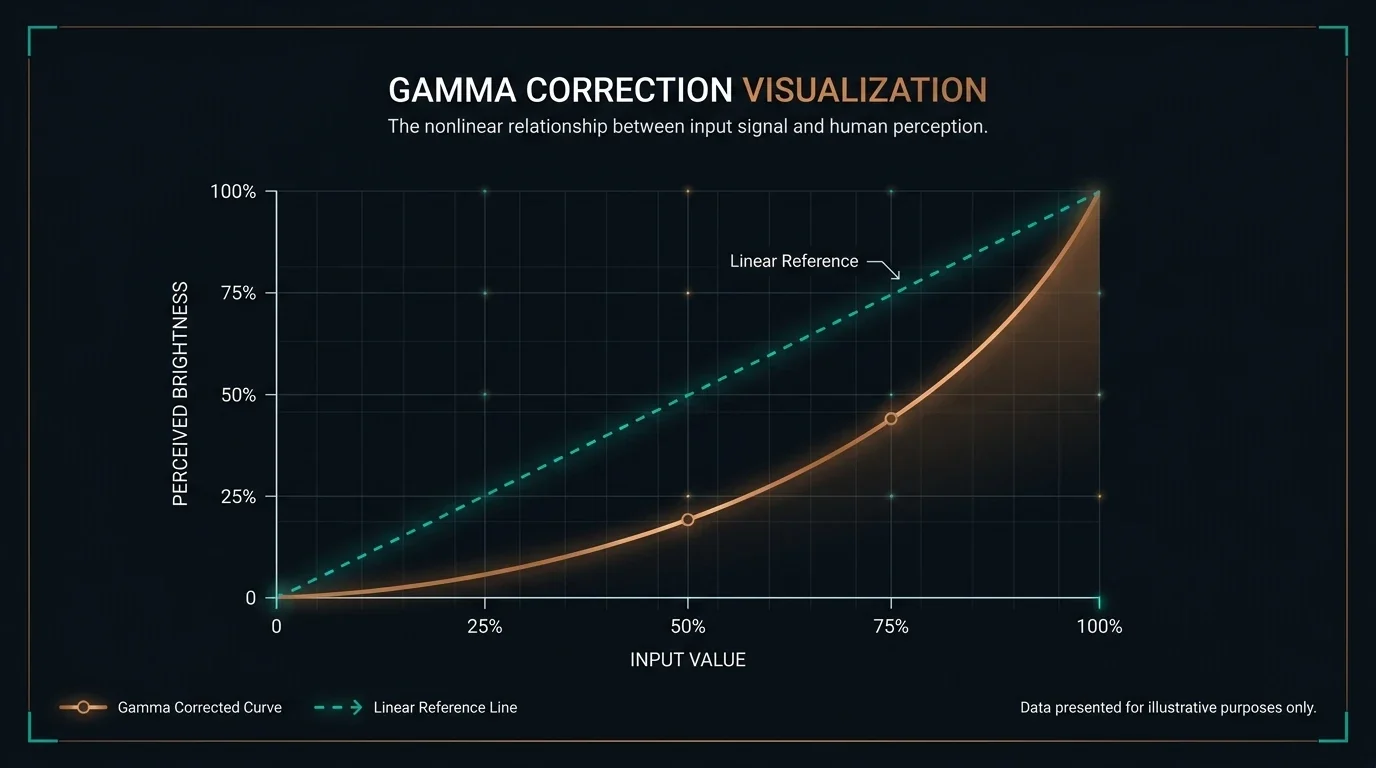
The Mathematics of Smooth Transitions
Thanks to gamma correction, more tonal resolution is allocated at low brightness levels, resulting in smooth transitions that look natural to the eye. The way a sunset animation or a slow fade to black flows without banding depends largely on the correct gamma setting. This makes a difference, especially on facades with large, monochrome areas.
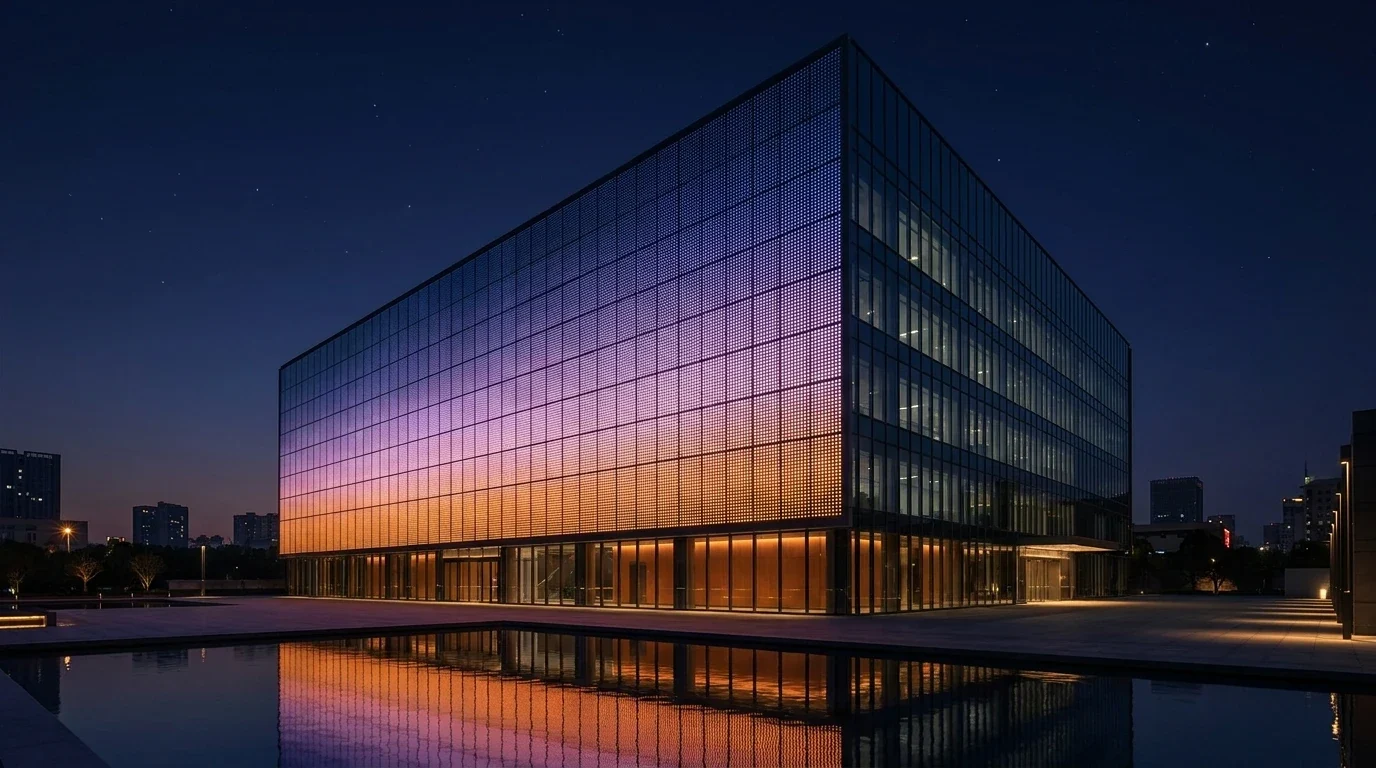
A Calibrated Facade
Color accuracy is not limited to gamma alone; RGB channel balancing, white point calibration, and inter-module color consistency are also required. LEDs from different production batches may carry slight color differences; a good control system balances these at the channel level to make the facade appear as a single unified surface. A properly calibrated facade creates a professional impression both by day and by night.