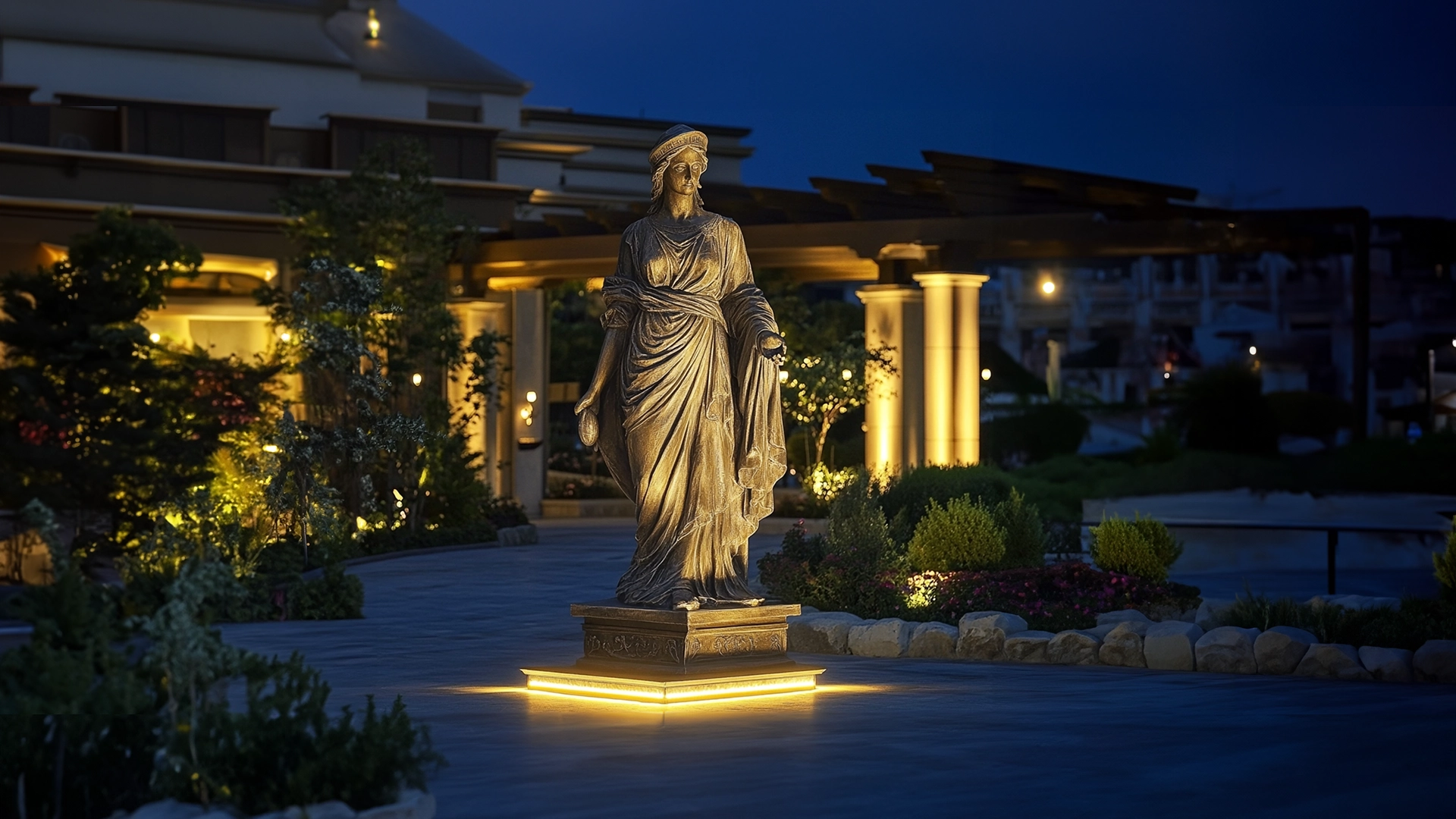

1. Preservation of Historical Fabric
Historical structures are susceptible to change and wear due to environmental impacts over time. Therefore, it is essential that the light sources used in the lighting design do not damage the structure or distort its texture and colors. Modern LED technology helps to preserve the historical fabric due to its low energy consumption and minimal heat production.2. Emphasizing Details
Historical structures are adorned with details such as arches, columns, carvings, and reliefs, each possessing artistic value. Highlighting these details in lighting design emphasizes the grandeur and aesthetics of the structure. For example, arches can be softly lit from the side, while carvings or reliefs can be dramatically illuminated from below or above.3. Color and Tone Selection
The materials used in historical structures and their surrounding environment play a decisive role in the choice of colors and tones for facade lighting. Overly bright or saturated colors can overshadow the natural essence of the historical structure. Instead, warm and soft white tones offer a more natural appearance.
4. Light Pollution and Lighting Control
When implementing facade lighting, it is crucial to avoid light pollution and to create a balanced environment with surrounding natural and artificial lights. Efficient energy use can be achieved by preventing unnecessary light dispersion through controllable systems and directing fixtures.5. Design in Accordance with Historical Identity
When illuminating a historical structure, its historical and cultural identity must be taken into account. A historical structure tells a story; therefore, the original texture should be preserved in the lighting, reflecting the building's character.
The Art of Bringing the Traces of the Past into the Night
Facade lighting in historical structures is an art aimed at preserving aesthetics and cultural heritage. Through correct techniques and designs, these structures continue to inspire admiration even under night lights. These illuminations serve as a bridge carrying the past into the present and illuminating the future in the light of history.