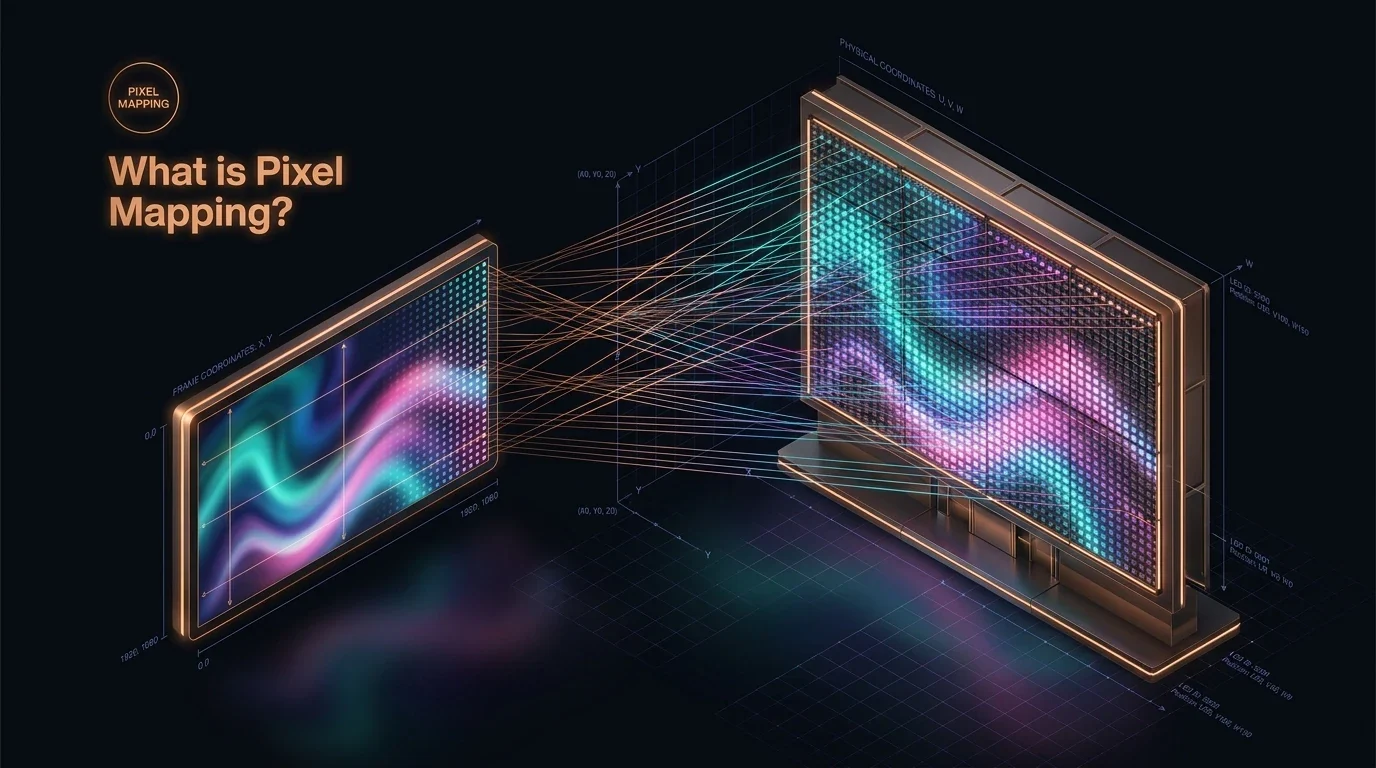
Turning the Facade into a Screen
If you want to use a building facade like a giant screen, you need to know where each LED will receive the image to be displayed. Pixel mapping is the process of assigning every pixel in a video or animation frame to the corresponding physical LED on the facade. Without this mapping, the image on the screen appears on the facade as meaningless patches of color.
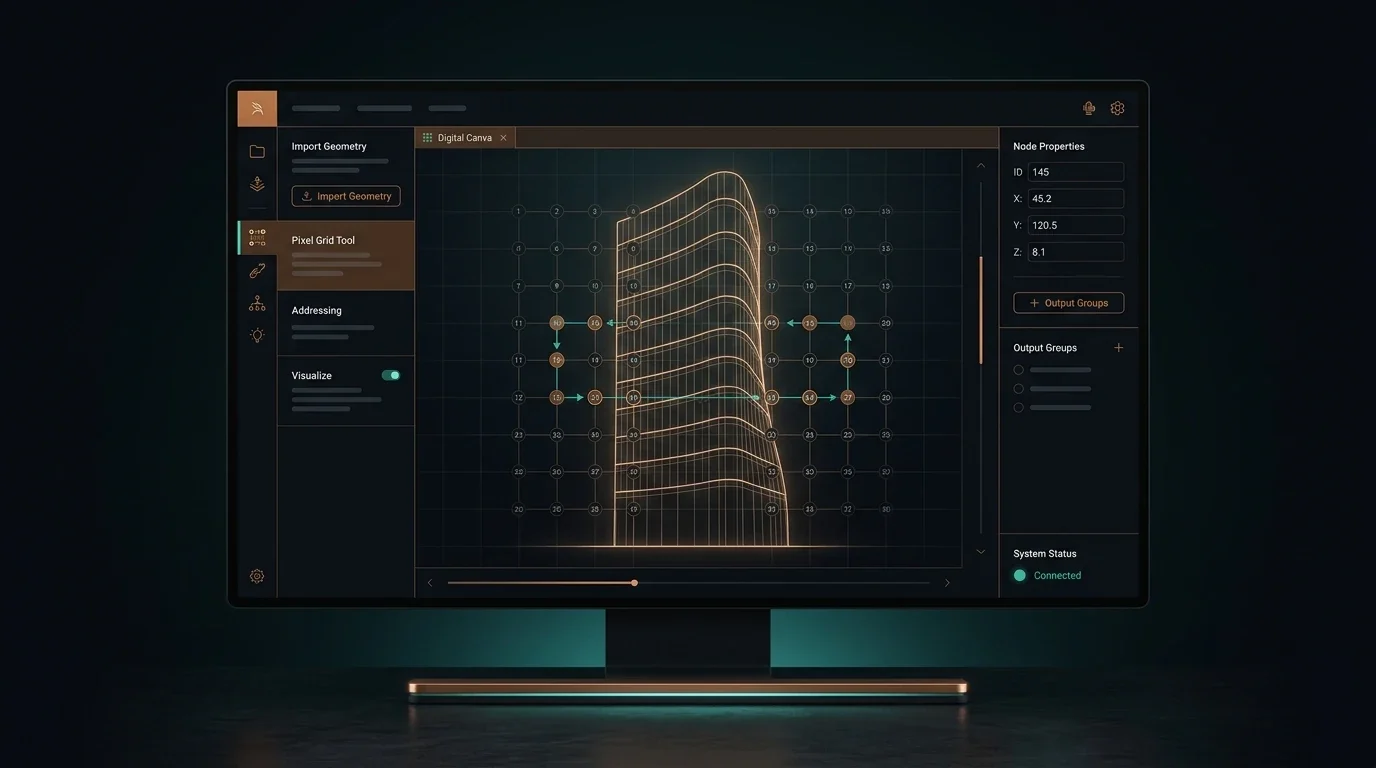
A Digital Map of the Physical Layout
At the heart of pixel mapping is creating a digital map of the LEDs' real-world positions. The row and column coordinates of each module are placed onto the virtual canvas in the control software. If the facade is not a flat surface and has a curved, broken, or irregular layout, this map requires manual fine-tuning. Accurate mapping ensures smooth, distortion-free animation even on a curved tower.
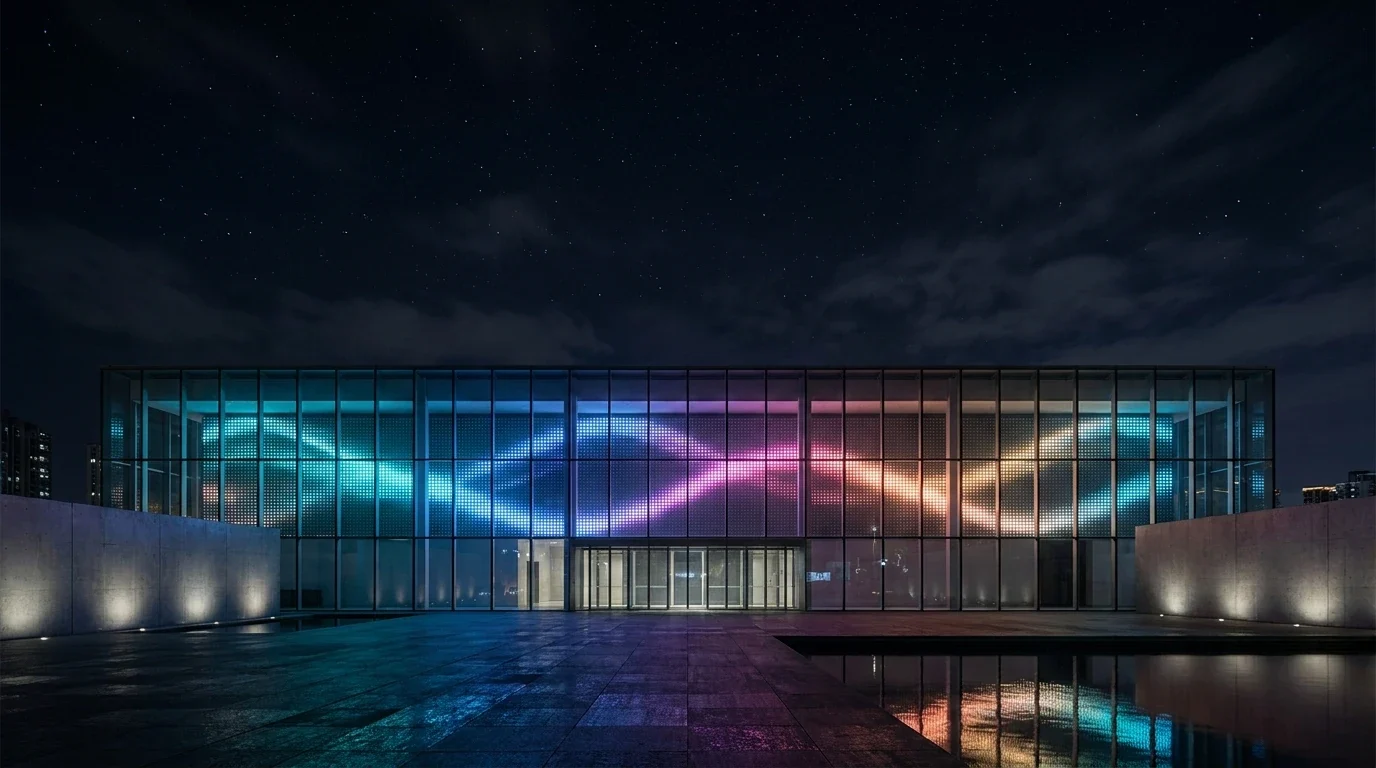
Good Mapping Means a Good Show
No matter how impressive the content is, if the pixel mapping is incorrect, the result is disappointing. Correctly defining the module order, direction, and starting point; and accounting for curves and gaps directly determines the visual quality of the project. That is why, in media facade projects, the mapping stage requires at least as much care as the content design.