LoRaWan

LoRaWan

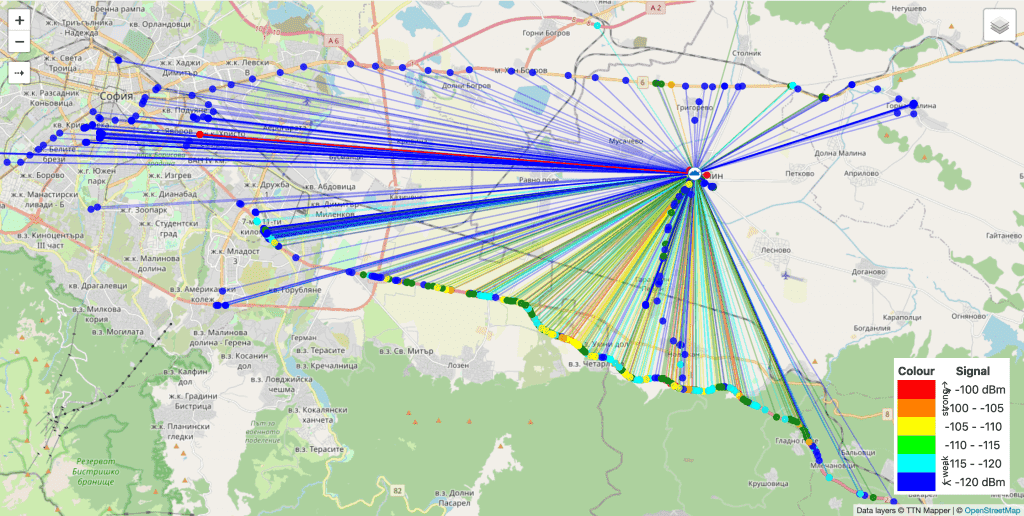
The Ideal Wireless Communication Solution for Smart City Lightings and Industrial IoT Applications. With strong encryption, low bandwidth and the ability to overcome physical barriers, LoRaWAN enables data to be transmitted securely, economically and efficiently.

Smart City Lighting Systems with LoRaWan

LoRaWAN technology offers an ideal solution for lighting systems with long-distance communication needs. LoRaWAN networks are flexible and scalable, making it easy to add new devices or remove existing ones. Most importantly, security measures such as end-to-end encryption and authentication ensure the safety and confidentiality of data.

LoraWAN has an important place among the communication technologies used in smart city lightings. This technology offers many advantages compared to other wireless communication technologies. LoraWAN offers long-range wireless network technology, enabling stronger communication in large areas and open spaces. 

LoraWAN is less affected by obstacles than other wireless technologies and can overcome physical barriers. This allows signals to pass through obstacles such as buildings and other structures.

With all these advantages, LoraWAN is considered an ideal communication technology for many different applications such as smart city systems. Therefore, using LoraWAN technology in the deployment of smart cities is an important step to create an effective communication infrastructure.

Long Distance (with LoRa Modulation)
LoRaWAN technology allows signals to pass through obstacles using a special propagation technology. The propagation technology used in LoRaWAN is called Multi-Stage Multi-Access. This technology allows signals to be sent across a number of different frequencies and repeated at different time intervals. Thus, signals can pass through obstacles and reach longer distances.Additionally, the signals used in LoRaWAN are low-frequency signals that can reach longer distances by consuming less power. Thanks to these features, LoRaWAN technology is ideal for long-range wireless communications and is used in many areas such as smart cities, industrial IoT and environmental monitoring applications.
Low Interference (with Chirp Spread Spectrum)
However, thanks to the algorithm used in LoRaWAN networks, the problem of signal interference is minimized. Specifically, LoRaWAN devices automatically adjust to send and receive signals in appropriate frequency ranges by measuring signal intensity. Thus, the possibility of interference with other devices on the network is minimized and the signal quality is optimized. In addition, thanks to the adaptive data rate management used in LoRaWAN networks, devices optimize the signal quality by automatically adjusting the data transmission rate according to the signal quality. This reduces the risk of signal interference and data loss and improves network performance. LoRaWAN uses a spread spectrum modulation called “chirp spread spectrum” (CSS). CSS changes the signal amplitude and frequency as it expands or spreads the signal. Therefore, CSS modulation increases the energy density in the signal, allowing the signal to reach longer distances.
High Security Communication (with AES 128 Bit)
LoRaWAN technology allows signals to pass through obstacles using a special propagation technology. The propagation technology used in LoRaWAN is called Multi-Stage Multi-Access. This technology allows signals to be sent across a number of different frequencies and repeated at different time intervals. Thus, signals can pass through obstacles and reach longer distances. Additionally, the signals used in LoRaWAN are low-frequency signals that can reach longer distances by consuming less power. Thanks to these features, LoRaWAN technology is ideal for long-range wireless communications and is used in many areas such as smart cities, industrial IoT and environmental monitoring applications.
Related Posts