Today, rapid developments in technology and electronics require firms to continuously invest in innovation and research and development (R&D) activities to remain competitive. Electronics R&D not only enables the development of new products and solutions, but also plays a critical role for sustainable growth and technological leadership.
Importance of Electronic R&D
The electronics sector has a constantly evolving market structure. In this dynamic environment, R&D enables companies to stand out in the market by making products faster, more reliable and more efficient. R&D also enables the development of innovative solutions to address today’s critical issues such as sustainability, energy efficiency and environmentally friendly technologies.
Main Areas of R&D
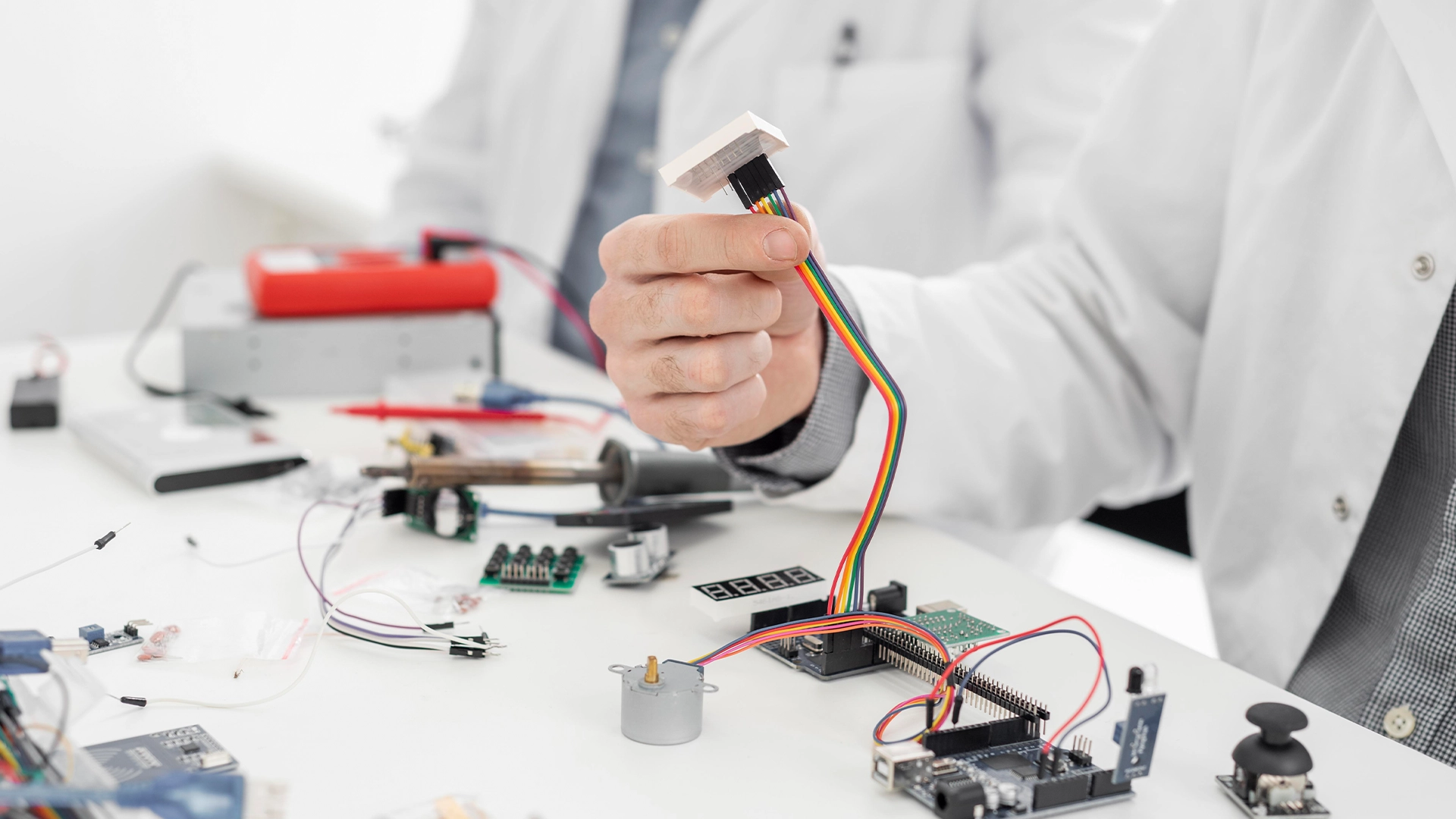
Electronic R&D enables innovations in a wide range of fields. Some of these areas are:
Semiconductor technologies
Embedded systems and microcontrollers
Communication technologies
Power electronics and converters
Sensor and sensing technologies
Artificial intelligence and machine learning integration
Innovative Design and Development Approaches
Success in electronics R&D is not limited to technical knowledge and skills. It also requires creative thinking, problem-solving skills and innovative design approaches. Here are some common strategies in this area:
Prototyping and Rapid Iteration:
Rapid prototyping techniques allow ideas to be tested and developed quickly.
Modular Design:
This approach enables rapid and cost-effective development of products.
User Centered Design:
Shaping products according to the needs and expectations of end users increases market success.
Open Innovation and Collaborations:
Collaborating with other companies, academic institutions and research institutes leads to new ideas and solutions.
Agile and Scrum Methods:
In electronics R&D, innovative design and development approaches enable faster and more flexible product development. Agile, one of these approaches, works in short-term cycles (sprints), allowing products to be developed based on customer feedback in the early stages.
Scrum is a project management method that adopts the Agile approach. Scrum is a transparent and collaborative approach where team members meet regularly to plan and evaluate the project.
Innovations Shaping the Future
Electronic R&D is a catalyst that enables companies to stand out with technological innovations. Continuous research and innovative approaches in this area allow the development of more efficient, reliable and sustainable electronic products, while at the same time being indispensable for achieving a competitive position in the global market. For companies that want to shape the electronic world of the future, R&D is not just an option, it is a necessity.



 Sitemizden en iyi şekilde faydalanabilmeniz için çerezler kullanılmaktadır. Bu siteye giriş yaparak çerez kullanımını kabul etmiş sayılıyorsunuz
Close
Sitemizden en iyi şekilde faydalanabilmeniz için çerezler kullanılmaktadır. Bu siteye giriş yaparak çerez kullanımını kabul etmiş sayılıyorsunuz
Close


