Cities are no longer defined solely by functional structures, but by the atmosphere and feeling they offer. At the center of this new approach are media facades that use light and movement as a means of communication. Media facades have the potential to create spaces that appeal to emotions, making the visual experience more than just a spectacle.
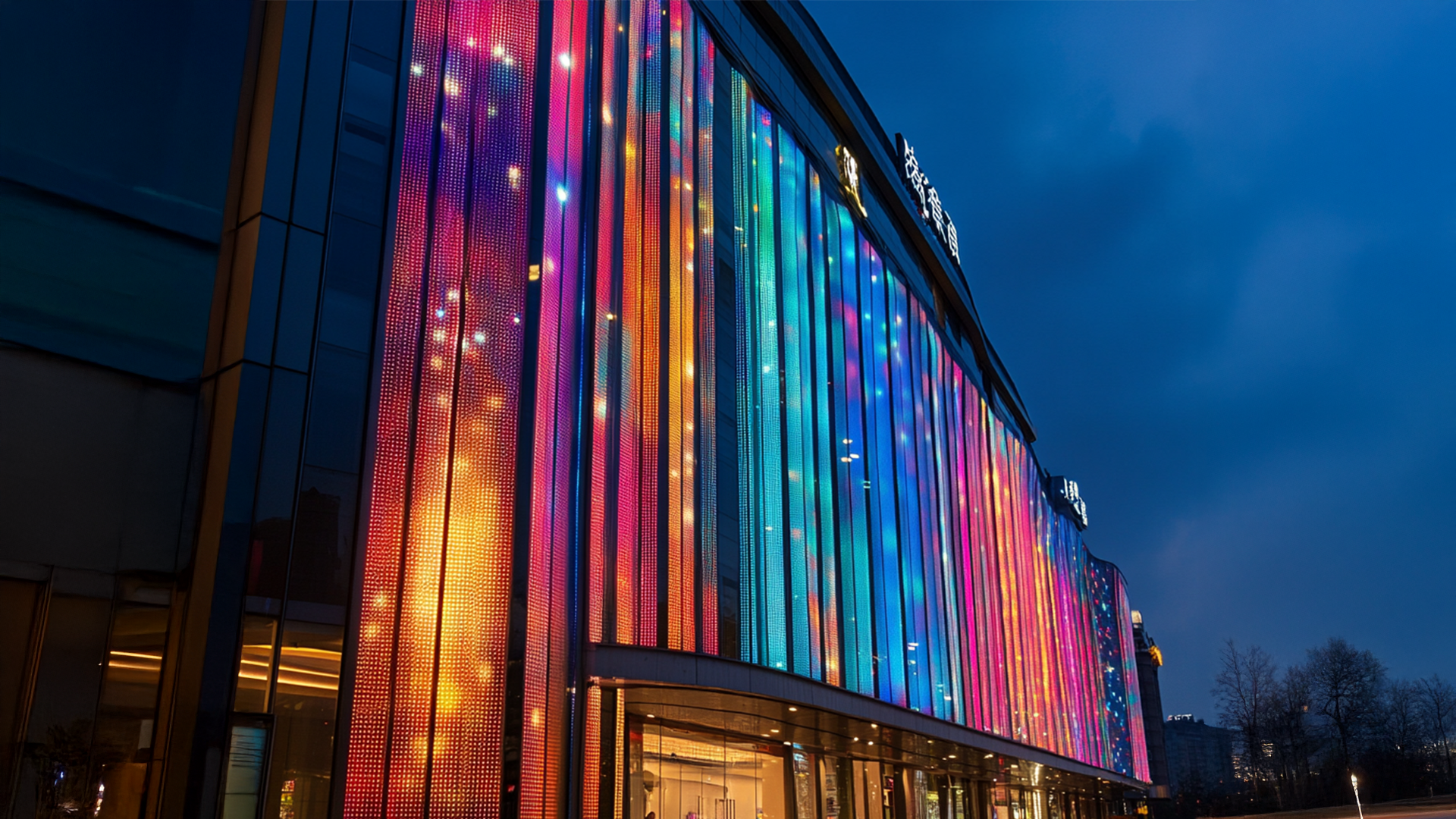
Sensorial design is an approach that aims to create a deeper relationship with space. In media facades, this approach comes to life with light transitions, color combinations and soft movements. Animations that affect the viewer’s mood make it possible to feel a façade rather than watch it. Especially rhythmic and natural transitions create meaningful experiences away from the mediatic chaos.
The use of colors in media facades has a direct impact on emotions. Warm tones increase feelings of intimacy and happiness, while cool tones evoke a sense of calm and tranquility. Slow color changes resemble the cycle of nature and bring a soft balance to the fast pace of city life. The media facade thus becomes not just a surface, but a “sensory space” that interacts with the people around it.
The use of movement in media facades is also an important dimension. Fluid and organic movements make the space feel alive, while fast and sharp transitions add dynamism and vitality. However, in sensory design, movement is planned not only to attract attention, but also to adapt to the mood of the viewer. This is a critical approach to reduce visual pollution and create a more harmonious environment, especially in crowded urban centers.
Sensory designed media facades offer significant advantages in terms of contributing to city life. Instead of intense advertising bombardment, cities become more livable when rhythmic and soft light narratives in harmony with human nature are preferred. This both strengthens urban aesthetics and has positive effects on the mood of city dwellers.
Thanks to advanced animation systems and high-resolution LED panels, media facades now have much more design flexibility. The critical challenge, however, is to use technology to create more meaningful experiences, not more spectacular ones. Human-centered media façade designs are not only eye-catching, but also strengthen the emotional connection people have with the city.
In the cities of the future, media facades will be designed not as a complement to architecture, but as living, feeling and interacting organisms. Media facades prepared with a sensory design approach will not only illuminate cities; they will make them warmer, more human and more memorable places.


 Sitemizden en iyi şekilde faydalanabilmeniz için çerezler kullanılmaktadır. Bu siteye giriş yaparak çerez kullanımını kabul etmiş sayılıyorsunuz
Close
Sitemizden en iyi şekilde faydalanabilmeniz için çerezler kullanılmaktadır. Bu siteye giriş yaparak çerez kullanımını kabul etmiş sayılıyorsunuz
Close


